Nutrition Consensus

Evidence sentiment publication

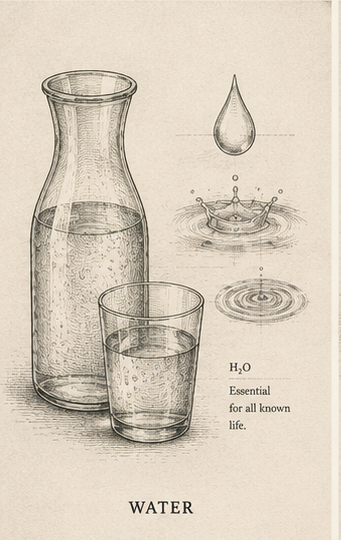
[H2O] Essential inputs

Water

Last updated Jul 18, 2026 · Refresh target: weekly

Is water good for you today?

Yes. Adequate water intake remains strongly favorable, with the main caveats coming from context such as contamination, medical fluid restrictions, or excessive intake.

Additional analyst color: Still the original blue-chip liquid asset.

Current score

+85

Sentiment

Strongly positive

Confidence

76 / 100

Controversy

14 / 100

Debated

Evidence items

156

30D0
90D0
1Y0

Consensus remains long water. The analyst desk notes that context still matters: fluid restriction, contamination, hyponatremia risk, climate, activity, and kidney-stone history can all move the trade.

Analyst noteConfidence is high for adequate hydration as a basic health input, while recent clinical evidence is still endpoint-specific and sometimes observational.

Last meaningful move

Stable ledger

Score move

0

points

Consensus has been stable over this period. No linked study produced a large enough score move to call out.

Evidence sentiment index

Historical price of the water thesis

Start
End
-500+50+100Zero line: mixed
Latest+85
SignalStrongly positive
Confidence76 / 100

Axis fitted: -50 to +100. Index scale remains -100 to +100.

Latest studies

Evidence tape

Sorted by evidence availability date, newest first.

Did we miss a study?

Showing 3 of 156 studies after filter and sort.

cohort

Insufficient Fluid Intake during Fishing as a Determinant of Hypertension among Traditional Fishermen in Coastal Soropia

Contagion: Scientific Periodical Journal of Public Health and Coastal Health · Jun 30, 2026Open study
Direction: PositiveIndex impact +7

Cross-sectional study of traditional coastal fishermen (Soropia, Indonesia) found insufficient fluid intake during long fishing hours was associated with higher hypertension prevalence, supporting adequate hydration as protective against elevated blood pressure. Small, single-occupation observational sample limits generalizability.

Details and limitations

Limitations: Review full paper for confounding, population characteristics, endpoint definitions, and study design before publishing.

Evidence weight 11 / 100semanticscholarjournalarticledoi:10.30829/contagion.v8i2.28631pmid:null

expert commentary

Effects of dietary intake and fluid consumption on urodynamic outcomes in patients with lower urinary tract symptoms undergoing bladder rehabilitation

Frontiers in Nutrition · Jun 17, 2026Open study
Direction: NeutralIndex impact 0

abstract suggests a mixed signal. The bladder health rehabilitation process depends on dietary choices and drinking patterns, which determine diet quality and hydration levels.

Details and limitations

Limitations: Review full paper for confounding, population characteristics, endpoint definitions, and study design before publishing.

Evidence weight 6 / 100semanticscholarjournalarticledoi:10.3389/fnut.2026.1865377pmid:null

animal

Hydration and Water Intake Among Children and Parents

EuropePMC · Jun 4, 2026Open study
Direction: NeutralIndex impact 0

abstract suggests a unfavorable signal. <h4>Background</h4>Studies show 80% of children in the United States do not meet the dietary guidelines for water intake, and 65% have elevated urine osmolality (UOsm), indicative of underhydration.

Details and limitations

Limitations: Review full paper for confounding, population characteristics, endpoint definitions, and study design before publishing.

Evidence weight 8 / 100europepmcjournal-articledoi:10.1016/j.tjnut.2026.101643pmid:42248249

Showing 3 of 156 studies.